
Introduction
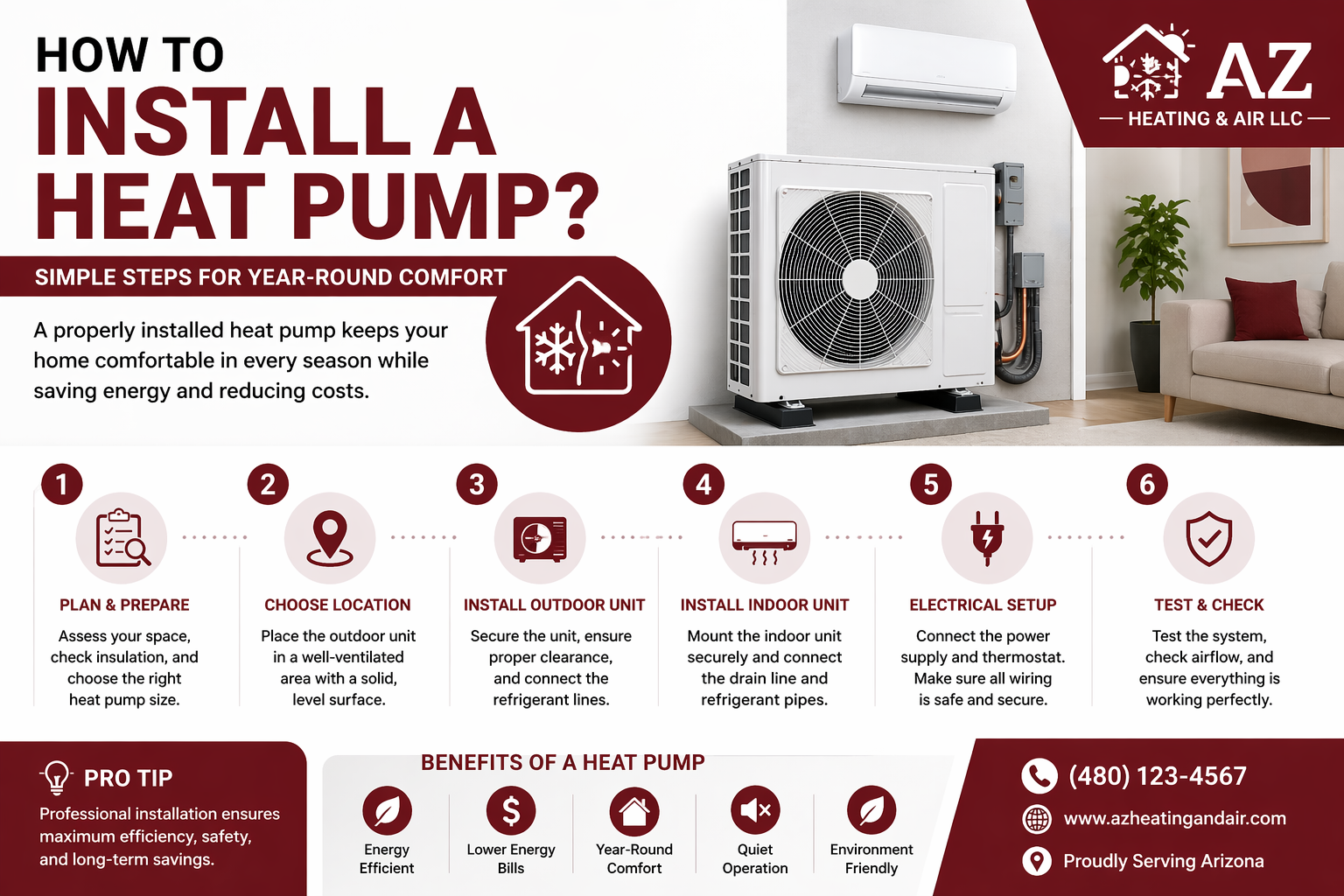
The heat pump installation process begins with an initial consultation with a certified contractor to assess your energy needs and select the right system for your home. From site preparation to installing the indoor and outdoor unit, running the electrical, plumbing and refrigeration and finally performing the testing, the complex process requires careful attention to detail and professional expertise. Hiring qualified contractors results in a stress-free, smooth installation that lowers your energy bills and provides year-round comfort.
Step-by-Step Heat Pump Installation: What to Expect?
Installing a heat pump offers 200% to 540% efficiency and provides both heating and cooling, eliminating the need for a separate air conditioner. If you want to cut down your energy costs and heat or cool your home more efficiently, consider upgrading to Energy Star-rated heat pumps. Professional installations ensure your system works optimally and provides comfort round the clock.
| Did you know?Heat pumps are 3 times more efficient than oil-fueled systems, and air source units can be up to 50% more efficient than conventional systems. |
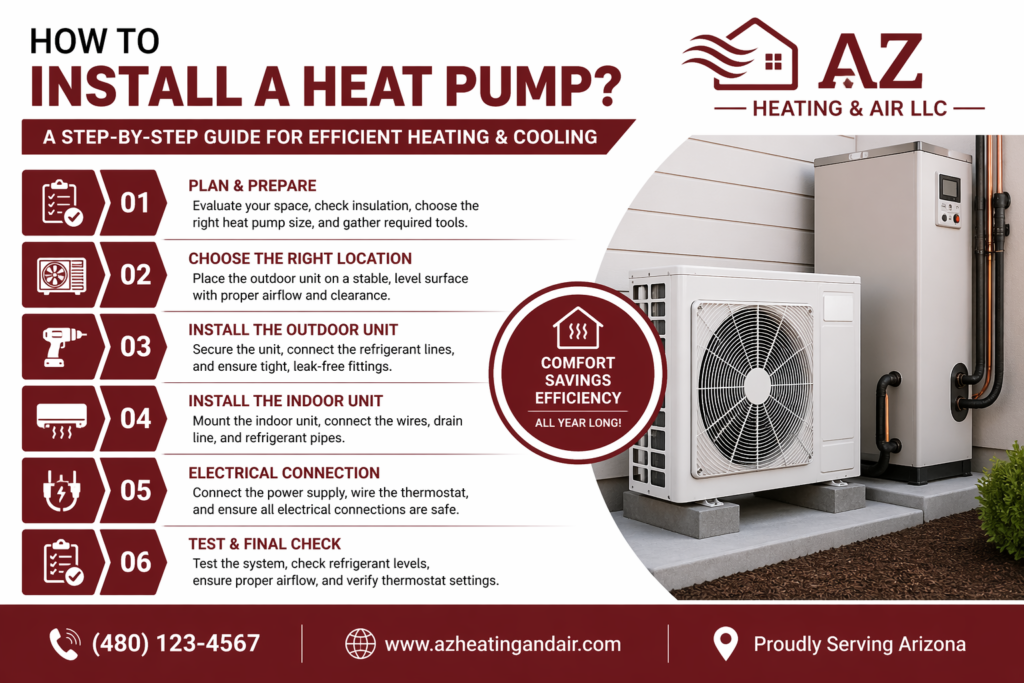
Here is your guide to heat pump installation.
- Initial Consultation
Consult a certified installer and discuss your existing heating system and your energy needs. Seek advice on which system and size will meet your needs. Professionals perform an on-site assessment to determine which heat pump system suits your needs.
- You can receive a 30% federal tax credit on the equipment and installation of an Energy Star-rated geothermal heat pump. Many utility companies and local governments also offer incentives and rebates on the purchase of heat pumps.
- Choosing the Heat Pump
Air Source Heat Pumps absorb heat from the air around the unit and are a cost-effective option.
Ground Source Heat Pumps absorb heat from the ground around the unit, and are more expensive to install due to the digging and drilling.
- HEEHRA (High-Efficiency Electric Home Rebate Act) requires proper heats pump installation by certified and trained contractors.
- Site Preparation
Choose a flat, stable area for the outdoor condenser, such as a concrete plinth, ensuring adequate clearance. For indoor units, choose a central location, preferably where the old boiler was placed.
| Fast FactHeat pumps work best on lower water temperatures ( 95-113℉ or 33-45℃), so in some cases, larger radiators or underfoot heating may be required to heat the home efficiently. |
- Installing the Outdoor Unit
Place the unit on the pad, ideally with rubber pads to reduce noise. Install brackets for wall-mounted units. Plan simple routes to direct the pipework from the outdoor unit to the inside of the home. Secure the outdoor units
Ground source heats pump installation is complex and requires excavation for horizontal pipe loops and drilling in the ground for vertical borehole systems.
- Mount the Indoor Unit
Install the indoor unit, including the wiring and a hot water cylinder if you are considering using the pump as a hot water system.
- Run Refrigerant Lines and Electrical
The installer will drill a hole through the wall for refrigerant lines (copper tubing), condensation drain, and communication cables. He will connect and insulate the water and refrigeration lines, ensuring that they are properly flared and tightened.
- Electrical wiring and Plumbing
Connect your heat pump to your existing radiators and underfloor heating systems. Flush out the system and replace any old pipework to upgrade to better ones. The electrician will connect the heat pump installer to the home’s electrical supply.
- Testing and Commissioning
Once the system is installed and connected, your installer will turn on the system and check whether the controls are functioning properly. They will vacuum the lines to remove air or moisture, check for any leaks or the need to balance the radiators.
| Important factInstalling heat pumps can reduce household energy bills by 20% to more than 60%. |
Conclusion
Understanding the installation process helps you make informed decisions, stay prepared and ensure a successful upgrade. By switching to an electric heat pump, you can reduce your carbon footprint by nearly one-third and reduce greenhouse gas emissions by up to 95%. Hire certified contractors for smooth installation and warranty protection of your system.
FAQs
How long does heat pump installation take?
Typically, an air source pump installation takes between 1 and 3 days, depending on the complexity of the system and whether the existing pipes need to be replaced.
Do I need to upgrade my home insulation?
While not mandatory, it is highly recommended to improve your home’s ventilation before installing a new heat pump to maximize efficiency and ensure proper heating.
How much noise does the outdoor unit make?
Modern pumps are relatively quiet and operate within established noise guidelines, but they should be placed away from the bedroom windows.