
You’ve got a room that’s always too hot in summer and too cold in winter, and running new ductwork just isn’t in the cards. Maybe it’s a garage you just finished, a sunroom addition, or a home office tucked away from the main system. Whatever it is, you need real heating and cooling without the hassle of a full HVAC overhaul.
That’s exactly where a ductless mini-split heat pump shines.
At AZ Heating & Air LLC, we’ve helped homeowners across Tacoma, Lakewood, Auburn, Puyallup, and Bonney Lake solve this exact problem. In this guide, we’re breaking down everything you need to know about mini-splits, from how they work to why they’re the go-to solution for small spaces so you can make a confident, informed decision.
What Is a Ductless Mini Split Heat Pump?
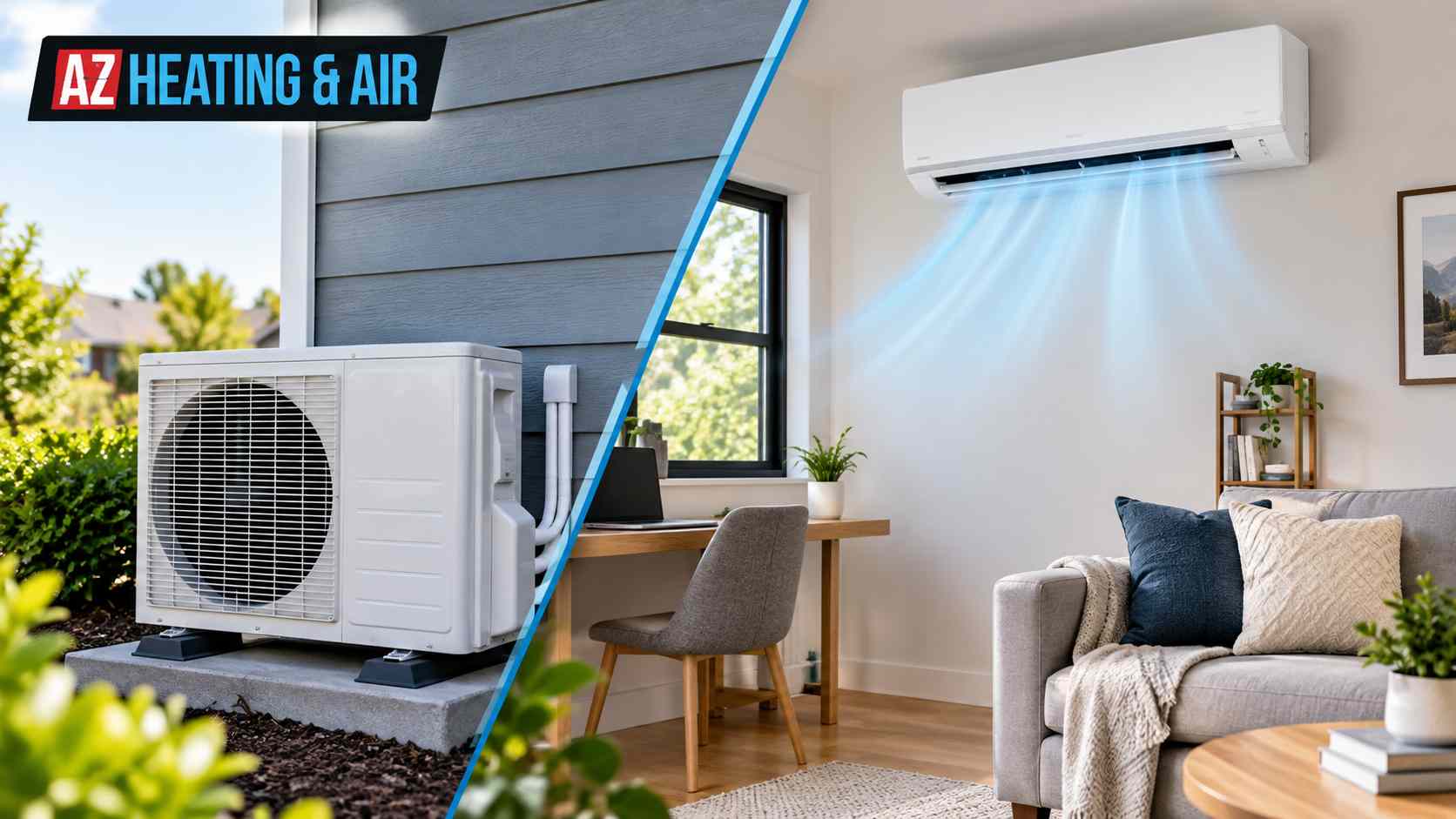
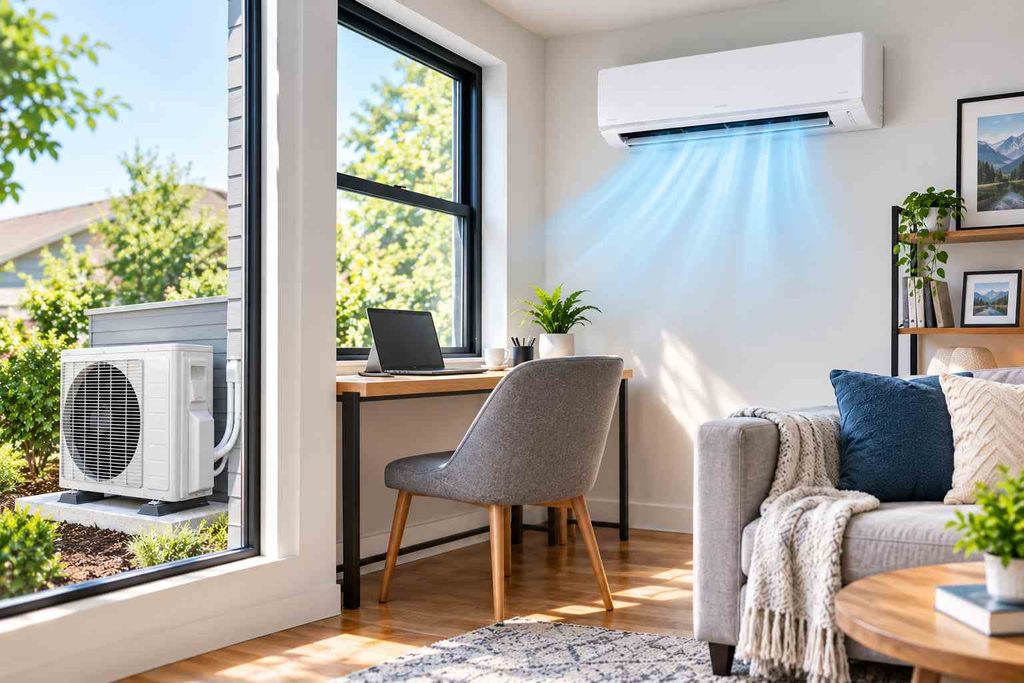
A ductless mini split heat pump is a two-part heating and cooling system: one compact outdoor unit and one (or more) indoor air handlers, connected by a small refrigerant line run through a 3-inch hole in the wall. No ducts. No major construction. No weeks-long installation.
Unlike a window AC unit that only cools, or a space heater that only heats, a mini-split does both year-round with far better efficiency than either.
Here’s the quick breakdown of how it works:
Summer: It pulls heat from inside your space and releases it outdoors, keeping you cool.
Winter: It reverses the process, extracting heat from the outdoor air (even in cold temperatures) and moving it inside to warm your space.
Because it moves heat rather than generates it, a mini split can deliver 2–3x more energy per dollar spent compared to electric resistance heating, which directly shows up on your utility bill.
Is a Mini Split Right for Your Space? Here’s Where They Work Best
Ductless mini splits are specifically designed for situations where traditional HVAC falls short. The most common applications we install in the South Puget Sound area include:
Finished garages and workshops, keeping the space usable year-round without heating the whole house
Home additions and sunroom spaces that weren’t included in your original ductwork plan
Home offices, especially important for remote workers who can’t rely on the rest of the house’s HVAC schedule
Finished basements are often the coldest room in the house and the hardest to heat with a standard system
Guest bedrooms and in-law suites give guests control of their own comfort without affecting the rest of the home
Older homes without existing ductwork: a practical alternative to an expensive whole-home duct installation
If you have a space that’s too hot, too cold, or just not connected to your main system, a mini split is almost certainly the right answer.
6 Key Advantages of a Ductless Mini Split for Small Spaces
1. No Ductwork Required — Faster, Cleaner Installation
The biggest barrier to adding HVAC to a small or isolated space is usually the ductwork. Running ducts through walls, ceilings, and floors is expensive, invasive, and sometimes structurally impractical.
A mini-split eliminates that. Installation typically requires just a small hole in an exterior wall for the refrigerant line, minimal disruption to your home, and can often be completed in a single day. For homeowners who’ve priced out duct extensions or whole-home installs, the difference in cost and timeline is dramatic.
2. Energy Efficiency That Saves You Money Every Month
Traditional ducted systems lose a significant portion of their energy through duct leakage. The U.S. Department of Energy estimates that duct losses can account for more than 30% of energy consumption in a typical home.
Mini-splits deliver conditioned air directly into the space with zero duct loss. Combined with inverter technology (more on that below), they consistently rank among the most energy-efficient heating and cooling options available for residential use. Many units carry ENERGY STAR® certification and can significantly reduce monthly utility costs compared to window units, baseboard heaters, or outdated central systems.
3. Zoned Comfort — Heat or Cool Only What You’re Using
One of the most practical advantages of a mini-split system is zoned heating and cooling. Each indoor unit operates independently with its own thermostat, which means:
You’re not heating or cooling rooms nobody is using
Different family members can set different temperatures in different rooms
You stop paying to condition your whole house when you only occupy one room
For multi-zone setups, one outdoor unit can support up to four indoor air handlers, giving you whole-home zoned control without a full duct system.
4. Whisper-Quiet Operation
Noise is a real concern, especially in a home office, bedroom, or living space. Traditional HVAC systems force air through ducts, creating that familiar whooshing noise every time the system kicks on.
High-end ductless mini-split models operate as quietly as 19–20 decibels, about as loud as a whisper or rustling leaves. Even standard models run far quieter than window units or baseboard heaters, making them ideal for bedrooms, offices, and any space where you need peace.
5. Inverter Technology: Smarter, More Consistent Comfort
Most modern mini-splits use inverter-driven compressors, a technology that continuously adjusts the compressor speed to match the exact heating or cooling demand of the space.
A traditional HVAC system is binary on or off. It blasts full power until it hits the thermostat set point, then shuts off entirely. This creates temperature swings and wastes energy during the start-stop cycle.
An inverter system ramps up when demand is high and slows down when the room is close to temperature maintaining a more consistent temperature, using less energy, generating less wear on the compressor, and extending the overall lifespan of the unit.
6. Flexible Mounting Options for Any Space
Mini split indoor units can be installed in several ways depending on your space:
Wall-mounted (most common): mounted high on the wall for optimal airflow
Ceiling cassette: recessed flush into a drop ceiling for a clean, unobtrusive look
Floor-standing: sits at floor level, ideal for spaces where wall mounting isn’t practical
This flexibility makes mini-splits a workable solution even in spaces with unusual layouts or limited wall space.
Why Professional Mini Split Installation Matters
DIY mini-split kits exist, and you’ll find them on the shelves at big-box stores. But there’s a reason professional installation is strongly recommended, and it’s not just about following the manual.
A proper mini-split installation requires:
Correct system sizing: an undersized unit will run constantly and never properly condition the space; an oversized unit will short-cycle, creating humidity problems and reducing efficiency
Proper refrigerant handling: Certified technicians are required by law to handle refrigerants; improper charging is one of the top causes of mini-split underperformance
Safe electrical connections: mini-splits require dedicated circuits; improper wiring is both a safety hazard and a warranty void
Optimal placement: the position of both the indoor and outdoor units affects airflow, efficiency, and noise levels
At AZ Heating & Air LLC, every mini-split installation we perform is sized correctly for the space, wired safely, and tested before we leave. We carry the proper certifications to handle refrigerants and back our work with honest pricing and clear communication no surprise charges after the job is done.
Serving Homeowners Across Pierce and King Counties
Washington state’s climate makes mini-splits a particularly smart investment. Our mild-but-damp summers and cool winters are ideal conditions for heat pump operation; these systems are significantly more efficient in moderate climates than in extreme cold or heat.
We install ductless mini-split systems throughout:
Tacoma, WA
Lakewood, WA
Auburn, WA
Puyallup, WA
Bonney Lake, WA
If you’re in the greater South Puget Sound area and want to talk through whether a mini-split is the right fit for your space, we’re happy to walk you through it no pressure, no upsell, just honest HVAC advice.
Frequently Asked Questions
How long does mini split installation take?
Most single-zone installations are completed within 4–8 hours. Multi-zone setups with several indoor units may take a full day. Either way, it’s far faster than installing a ducted system.
How much does a ductless mini-split cost to run?
Operating costs depend on the unit’s efficiency rating (measured as SEER for cooling and HSPF for heating) and how often you use it. That said, mini-splits are among the most efficient systems available; most homeowners see lower monthly bills compared to window units, baseboard heaters, or older central systems.
Can a mini split heat effectively in cold Washington winters?
Yes, modern mini splits are designed to operate efficiently in temperatures well below freezing. Many models are rated effective down to -13°F, which is far colder than typical winter lows in the Tacoma and Puget Sound area. Washington’s mild winters are actually ideal for heat pump performance.
How many rooms can one mini-split system serve?
A single outdoor unit can typically support up to four indoor air handlers (zones). If you need to condition more than four separate areas, a second outdoor unit would be required.
Do mini splits require regular maintenance?
Yes, but it’s minimal. The indoor unit’s filter should be cleaned every 2–4 weeks (it’s a simple rinse that takes minutes). An annual professional inspection keeps the system running at peak efficiency and catches any small issues before they become expensive repairs.
Ready to Add Comfort to That Problematic Space?
If you’ve been putting off dealing with a room that’s never the right temperature, a ductless mini-split heat pump is likely the most cost-effective, least disruptive solution available to you.
AZ Heating & Air LLC provides professional mini-split installation throughout Tacoma, Lakewood, Auburn, Puyallup, Bonney Lake, and surrounding areas in Washington state. We size the system correctly, install it cleanly, and stand behind our work.
Call us at (253) 376-6489 or reach out online to get a straightforward quote no fluff, no pressure.